
menu

Use Case
Merchant onboarding
What is merchant onboarding?
Merchant onboarding is the process of an acquiring payment processor assessing a merchant before allowing them to process payments.
In practice, this usually means:
- capturing merchant information through an onboarding portal
- verifying merchant and director identity (KYC, KYB)
- checking sanctions, adverse media, fraud, chargeback, prohibited-business, and credit risk
- a combination of rules-based and human-in-the-loop decisioning
Why merchant onboarding needs orchestration
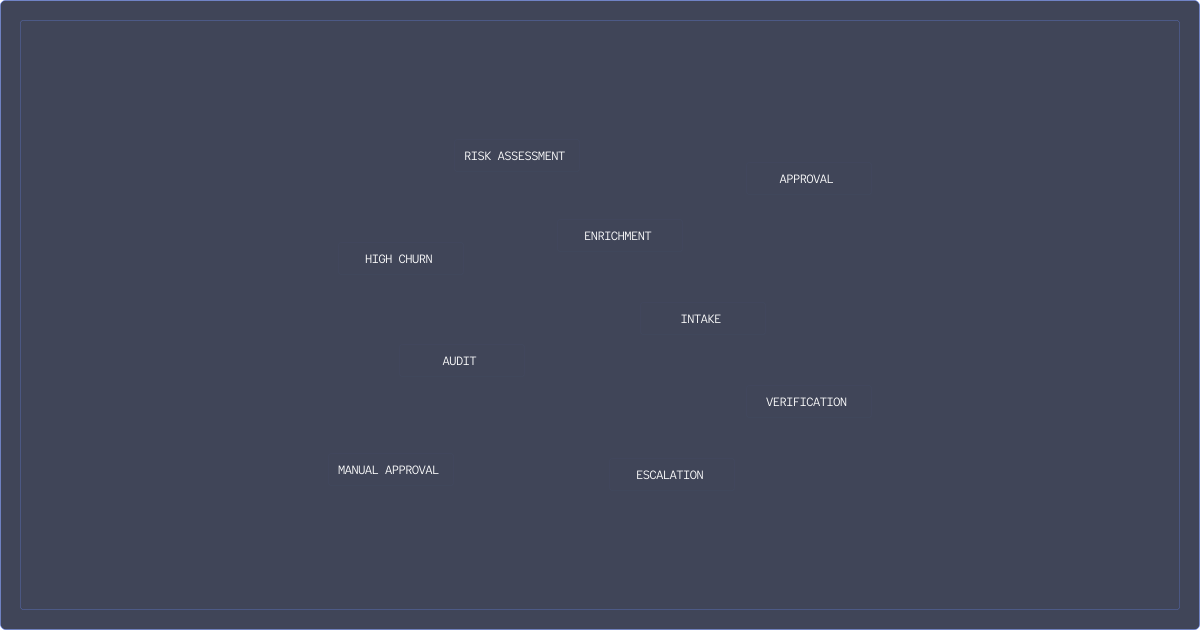
- Onboarding is complex. It spans intake, enrichment, verification, risk assessment, escalation, approval, and audit.
- Bad onboarding processes create churn. Merchants don’t enjoy filling out confusing forms. Poorly designed onboarding flows cause churn.
- Merchants hate waiting. Whether a small merchant being onboarded over 6 days or an enterprise that takes 90+ days, slow onboarding is the #1 cause of churn.
- Compliance is not optional. Regulators have repeatedly blocked acquirers from onboarding new merchants when their controls have been insufficient.
- Multiple data sources need to be connected. Effective onboarding relies on dozens of checks, sources, and many conditional paths.
- Manual coordination does not scale. Without orchestration, analysts become the glue between systems: chasing documents, checking portals, and keeping cases moving.
- Risk policies are hard to implement. Board-approved risk appetite is only useful if it is reflected in the actual workflow.
Building Merchant Onboarding with Anqa
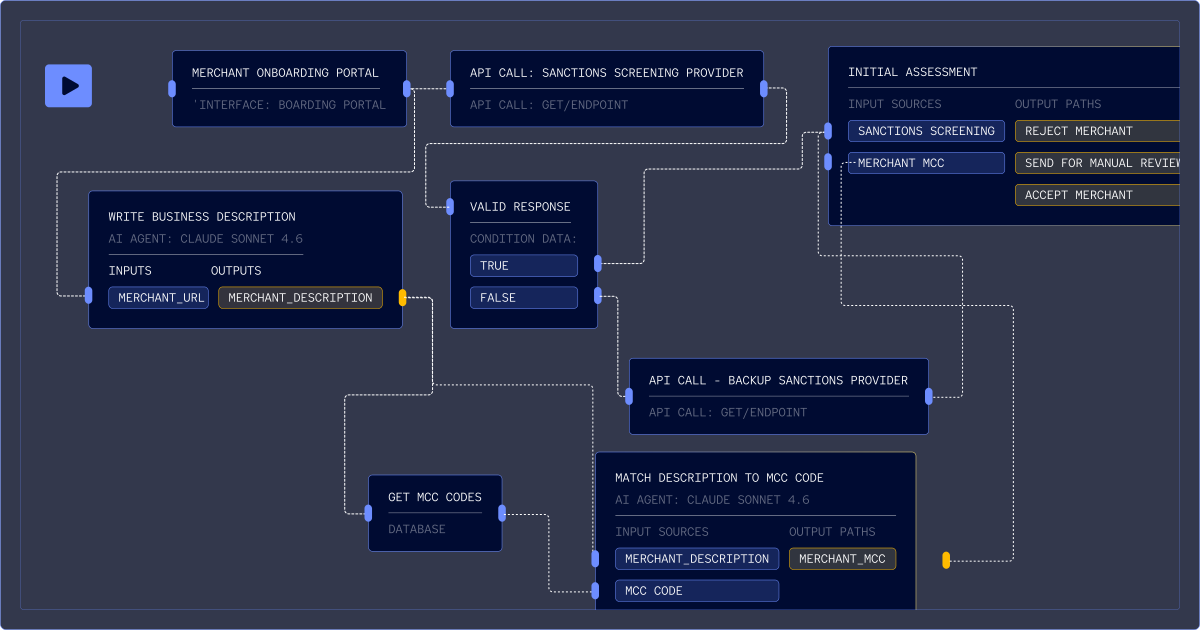
Start with proven templates. Anqa provides a library of workflow templates covering key regulatory requirements across the UK and individual EU member states. These give you a structured starting point instead of having to build from scratch.
- Adapt the workflow. With support from a deployed engineer, you configure the onboarding journey around your merchant segments, products, geographies, risk rules, escalation paths, and approval thresholds.
- Build customer interfaces. Create fully branded merchant-facing intake flows that collect the right information with minimal friction. Build review portals for your internal users to provide them the right data and take action.
- Connect your data providers. Integrate the providers you already use for KYB, KYC, sanctions, adverse media, fraud, website analysis, corporate registry data, bank account checks, and others.
- Unite fragmented data into one workflow. Anqa connects all your data streams into a single onboarding process, turning onboarding complexity into faster approvals, stronger controls, and fewer dropped merchants.
Continuous Improvement with Anqa
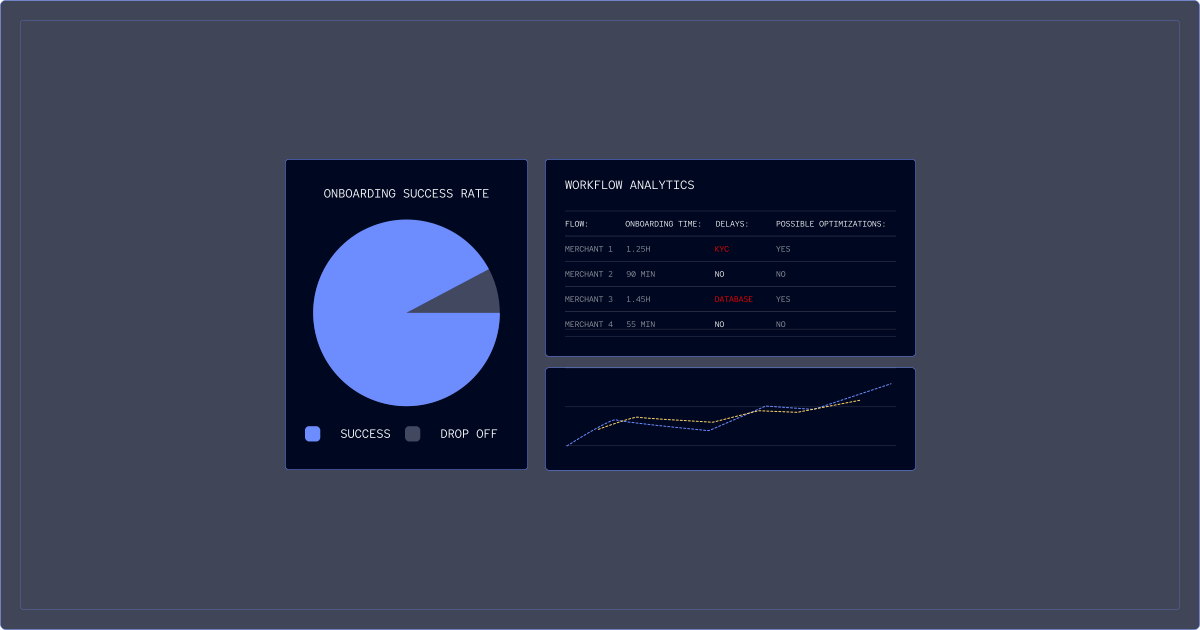
- Go live, then optimise. Once the workflow is running, Anqa provides tools so you can see what’s working and what’s not
- Find the friction. Anqa’s session replays and workflow analytics show you where merchants drop off, where cases stall, which checks create delays, and which review steps add little value.
- Iterate. With Anqa’s workflow builder it’s easy to refine interfaces, swap data providers, change workflow behaviour, and embed AI agents.
- Improve the outcome. Reduce time-to-board, increase conversion, lower manual review, and keep controls aligned with regulatory requirements and risk appetite.
- Keep innovating. Anqa manages the infrastructure, letting your team focus on improving customer outcomes.
Outcomes
While every acquirer has a unique merchant profile, the following business outcomes are achievable with Anqa’s merchant onboarding workflow.
- 10x faster time-to-board. Anqa’s onboarding orchestration results in a 10x reduction in onboarding time, whether it’s days to hours for small merchants or months to weeks for enterprise accounts.
- 20% reduction in churn. Reducing friction and cutting onboarding time leads to reduced churn, allowing you to realise more revenue, quicker.
- 800% increase in passthrough boarding. Adding fallback logic and additional data providers ensures analysts are only involved in high-value tasks.
- Reduced overall risk exposure. A fully orchestrated workflow ensures that onboarding adheres to risk appetite without chance for erroneous judgement.

